
Javier Elias is a Peruvian-born visual storyteller and photographer based in Berlin. Known for blending identity, nature, and culture through a deeply personal lens, his work spans documentary, editorial, and fashion photography. Rooted in the vivid textures of Andean culture and shaped by his experience as a migrant in Europe, Elias explores themes of displacement, ecological awareness, and self-representation. His latest editorial, Artifi-cium, merges sustainable fashion with environmental reflection, showcasing his signature balance between aesthetic and message.
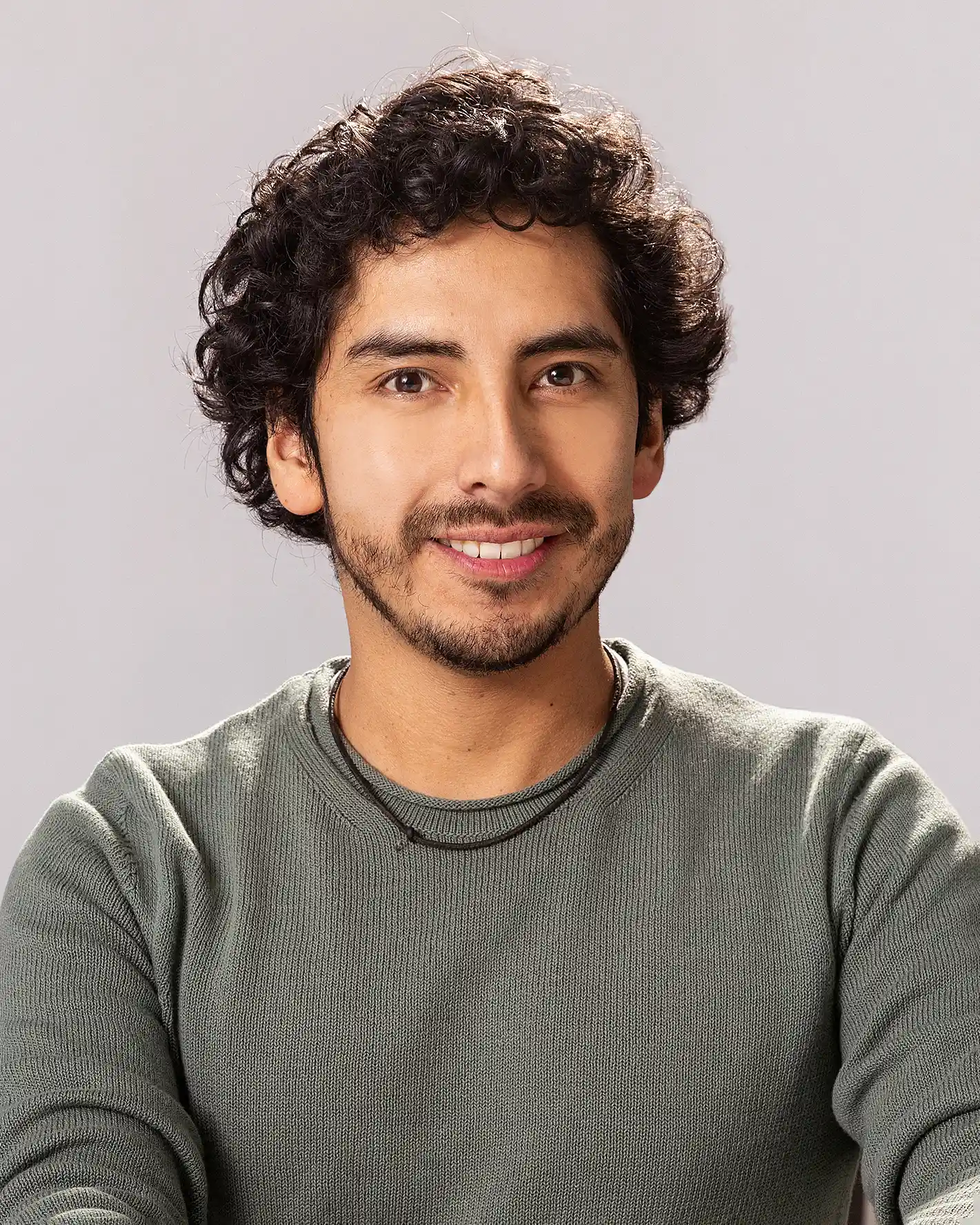
What are some of your earliest memories of visual storytelling or creativity growing up in Peru?
I grew up in Lima, Peru’s bustling capital. However, it wasn’t until I started traveling across the country, particularly deep into the rainforest, that my passion for visual storytelling truly awakened. The lush, raw beauty of nature there touched something profoundly human in me. It opened my eyes not only to landscapes but also to emotions, rhythm, and connection. That’s when I began to grasp how to tell stories visually.
Was there a specific moment or influence that sparked your interest in photography?
During my bachelor’s degree, I took a photography class where we still worked with film. It was the first time I took photography seriously. I discovered that I could capture life from my unique perspective, which excited me. Since 2007, I haven’t stopped taking photos.
“Photography helped me rediscover my roots from afar, through the lens, I began to understand who I am, where I come from, and how to tell that story.”
Are there Peruvian artists, traditions, or visual motifs that you feel still influence your artistic eye today?
I recently realized that much of my work involves using various colors and textures reminiscent of Andean culture.
Your work often reflects on identity—how has living in Berlin and your Peruvian heritage shaped your visual language?
After spending many years in Germany, I began to see and appreciate my Peruvian and Latin culture in a new light. Many aspects of it have become clearer, and I now value our warmth, empathy, diversity, and vibrant traditions. Through this process of reevaluating my heritage, I realized that my visual language and aesthetic are profoundly inspired by my culture and my roots. However, it was only in Germany that I started to reflect on my Peruvian and Latin identity and its influence on my current work. For instance, I often incorporate environmental themes into my art, drawing inspiration from my time as a documentary photographer in the Peruvian rainforest. Living in Germany made me contemplate who I am and what it means to be a Latin immigrant in Europe.
How does your own experience as a migrant inform the way you frame human presence and displacement in your images?
Living abroad meant getting to know myself anew. In Germany, I had the opportunity to build a new identity since nobody knew me. This process allowed me to reflect on my past experiences and influences while considering what it means to be Peruvian and what I value. Being an immigrant gave me the chance to rediscover myself and shape my identity. However, this occurred because I chose to move away from Peru; I felt like I was no longer growing there as a person. There’s a significant difference between choosing to leave and being forced to do so.
Your career has taken you across continents and disciplines—how would you describe your evolution as a photographer?
I began my photography journey while pursuing my bachelor’s degree. It was love at first shot. I started capturing the simple things around me, from everyday objects to buildings, lights, and shadows. After that, I spent many years engaged in documentary and journalistic photography until I moved to Germany to pursue my Master of Arts degree. This final step allowed me to develop concepts I could also apply to my photographic work, enabling me to create new worlds, aesthetics, and ideas in images. My last process evolved into doing fashion editorials, including my recent one called “Artificium.”
Do you remember your first camera or the first photo you took that made you feel like an artist?
In 2007, while learning to use an analog camera for a photography class, I likely received an assignment to create photos reminiscent of Hungarian–French photographer Brassai’s images of “Paris by night.” I went downtown in Lima with my dad to take photos, which felt amazing. Seeing those black-and-white photos changed my life, and I fell in love with photography.
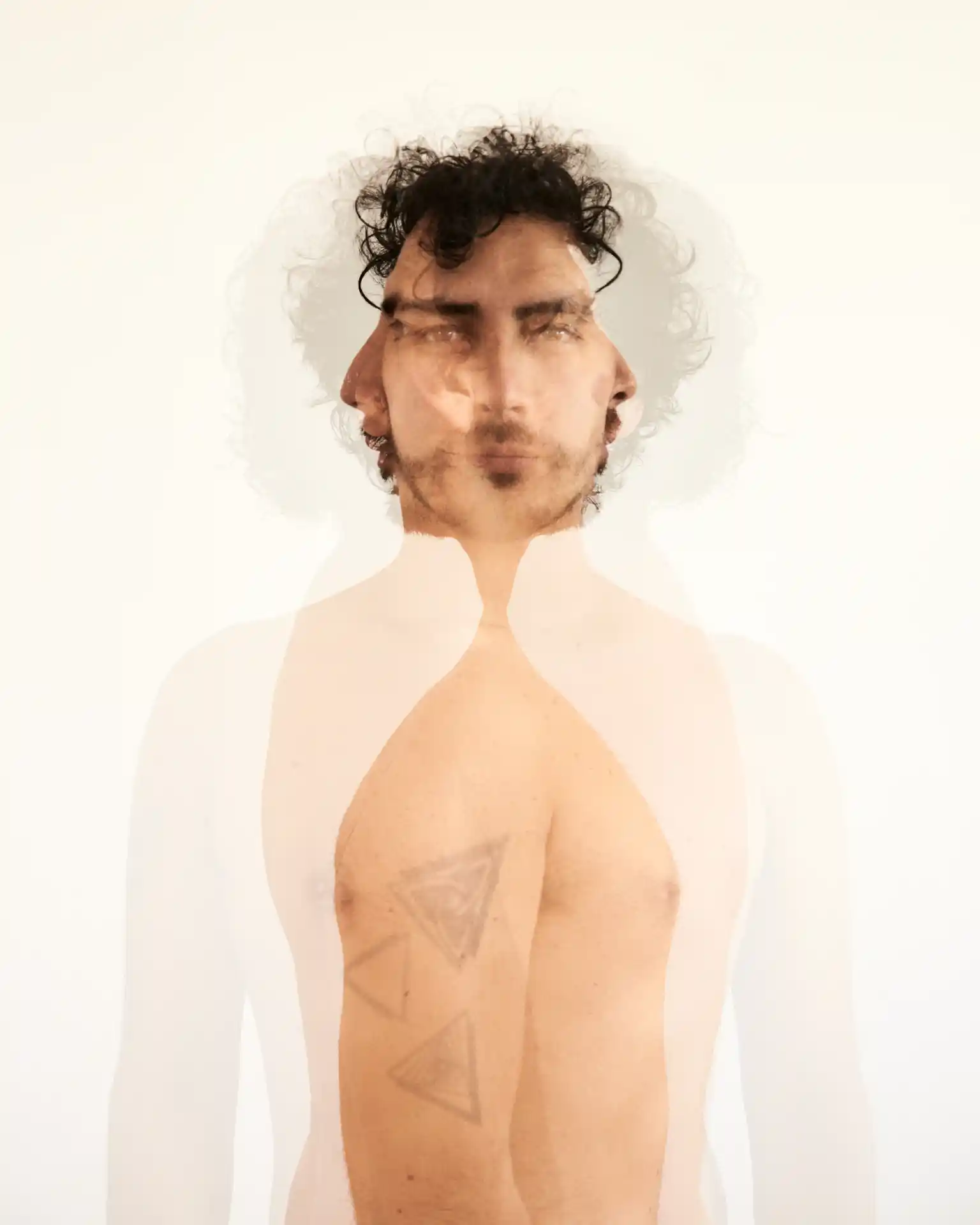
Do you feel your identity as a Latin American artist gives you a different lens or responsibility when working within European cultural contexts?
It sparked my interest in various topics, such as the environment, which I still care about today. My migration journey, along with my interests in identity, is something I reflect on in my current work. My main focus is on how we construct our identity through representing ourselves in photographs, paintings, or even simple selfies.
Can you speak about a moment during your career where your own sense of identity was challenged or redefined through your work?
Yes, constantly. But especially when I started working with new photography genres and experienced a bit of impostor syndrome while doing professional work I didn’t yet feel fully prepared for, and my identity had to adapt. For example, when I began doing fashion photography, I initially had little or unclear experience, but over time, my identity shifted to that of a fashion photographer. After years and hundreds of photo shoots, it became part of who I am. I think this often occurs at the beginning of one’s career.
“Artificium” meditates on our estrangement from nature. What personal realizations or emotional responses led you to explore this theme through photography?
Since I no longer live in Peru, what I miss most—besides my family and the food—is the Amazon rainforest. I find it to be a wonderful place, unique in the world. However, I also realized, after some time, that on one hand, I feel good as a human being; I recharge my energy there. On the other hand, through my lifestyle, I harm nature or at least don’t take proper care of it. I think this is something we all recognize as humans, or at least a large part of humanity does.
What role does fashion—particularly sustainable fashion—play in this editorial’s message about ecological awareness and responsibility?
That’s a very good question. When I first came up with the concept several years ago, it took me a long time to find a brand or designer who created pieces that matched the aesthetic I envisioned. It felt almost impossible. I discovered Jenny by chance through a friend’s contact, and when she showed me her designs and mentioned they were also sustainable fashion, it was a magical moment. Her brand, the pieces, and her concept fit perfectly with the story. They aligned exactly with the message of the editorial about humanity’s relationship with nature and how we can become more conscious of it.
How did working with Jennyinibiland, a handmade and sustainable brand, complement your own values around environmental storytelling?
Initially, I didn’t consider using sustainable or handmade garments; my focus was primarily on aesthetics. However, when I met Jennyinibiland, her brand concept and the way she works truly impressed me. It definitely adds depth to the idea and inspires me to explore this topic further in future editorial fashion projects.
What does the creative process look like when you’re building a story like “Artificium”? Is it instinctual, heavily researched, or emotionally driven?
It’s definitely a combination. On one hand, I’m very aware of what’s happening around me, and when I notice a detail, an idea, a project, or a message that inspires me, I use that as a starting point. At the same time, it’s intertwined with my past, personal interests, and whatever I’m feeling. I also tend to research the topic, related concepts, or similar work to keep myself inspired and delve deeper into the project.
How do you choose the locations, materials, and collaborators that bring your visual narratives to life?
Everything starts with the concept. I don’t take on any extra work unless it aligns with the idea, the message, or the story. From there, the location, materials, people, and even the narrative develop in harmony with that concept. My creative process always begins with the concept.
Is there a particular image or moment from the “Artificium” shoot that felt like a breakthrough or synthesis of your ideas?Yes, definitely. There’s one photo in which the model is wearing a metallic outfit and surrounded by nature. Her expression conveys a feeling I can’t quite define. The image as a whole reflects the concept of this dichotomy, this contradiction we face as humans in relation to nature. It’s a powerful photograph and the key image of this project.
How do you balance commissioned work or editorial projects with more introspective, personal series?
My personal creative work usually takes much more time because I’m very busy with commissioned projects. Nevertheless, I always try to stay creatively active and produce something in that direction. Sometimes, what’s challenging is assembling a team, as there isn’t always a big budget, and the work is just as demanding as a commissioned project. However, there’s always room for it, and there are always people eager to engage in creative work, which makes it exciting and enriching.
What does a typical day in your life in Berlin look like? How does the city fuel or contrast your creativity?
Berlin is a city full of contradictions, creativity, and diverse people. It’s hard to explain my relationship with this city. On one hand, there are aspects that attract me and that I truly love. On the other hand, like anyone, I sometimes need to escape into nature or be near the sea. Right now, it’s a good place for me. However, I can imagine that in the future, I’ll seek new spaces to continue growing.
How do you disconnect from work, or is your creative lens always on—even in daily life?
I’m a very active person and rarely take breaks. If I’m not working on something related to photography, I’m usually doing something else that allows me to learn in some way. But when I really want to disconnect from everything, I travel to another city—often to Spain—because it makes me feel closer to home.
Do you see your photography as a way to document your personal story or more as a mirror for collective experiences?
I believe it’s a mix. Photography, for me, is a way to express myself. In the beginning, it focused more on work, documentary, and aesthetic photography. Later, it evolved into a means of creating messages and telling stories. It’s a combination of what’s happening around me, what I perceive, and what I feel and think.
What drew you to Berlin, and what has surprised you most about living and working in Europe?
I ended up in Berlin by chance. I wanted to learn German and see if I liked the country enough to pursue a master’s degree, so I found a volunteer opportunity in Berlin. At first, I didn’t like it; it felt dark and cold. But later, when I discovered more alternative and underground spaces along with the cultural scene here, I really started to enjoy it. I had traveled to Europe many times as a child since I have family in Paris, so I felt connected to Europe from a very young age. Moving here felt like a natural step in my life. It’s an interesting place, but living here also made me realize things I didn’t know I valued so much about Peru, like the culture, empathy, food, and nature.
Has being based in Europe changed the themes or aesthetic of your work in any noticeable way?
It has certainly changed my perspective and the way I approach certain aesthetics. If I had stayed in Peru or elsewhere in Latin America, I would have focused on different aspects. But since I’m here now, seeing the difference is difficult. I’ll likely realize it in the future when I look back and reflect on the work I was doing. I think it’s easier to understand the past and see what kind of work interested you then, but it’s challenging to see it clearly at the moment.
Do you feel more like an observer or participant in European culture, especially through your artistic lens?
I definitely participate more than I observe. In the early stages of my photography journey, I was primarily an observer. However, after moving to Europe, I began to truly engage and create.
What advice would you give to emerging photographers who want to address big themes—like migration or climate crisis—without becoming overly literal or didactic?
Start doing. Often, we hold off until we have something extremely interesting and perfectly crafted, which can significantly hinder our creative process. I believe the key is to begin and learn throughout the journey. Simultaneously, it’s essential to remain receptive to what’s occurring around you, to gather ideas and influences from your environment, and to conduct the necessary research and creative work to comprehend how concepts can arise from what’s happening. I also think it’s an ongoing process, which is something I cherish because there’s always something new to learn.