
Bella Monroe is a rising international model whose career gained momentum rapidly, with agency representation across Los Angeles, New York, and Milan. Originally studying to pursue a career in nursing, Bella discovered fashion unexpectedly and found in it a new way to explore empathy, observation, transformation, and storytelling.
Her work goes beyond traditional modeling, approaching fashion imagery as a form of cinematic storytelling. Rather than simply posing, Bella steps into characters, creating emotion and leaving space for the viewer’s imagination. Her creative approach is especially evident in Little Miss Hollywood, where glamour, chaos, vulnerability, and playfulness collide in imagery inspired by the feeling of a film frozen in time.
With a growing interest in acting, Bella continues to explore the space between fashion and cinema—creating images designed not simply to be seen, but to be felt.
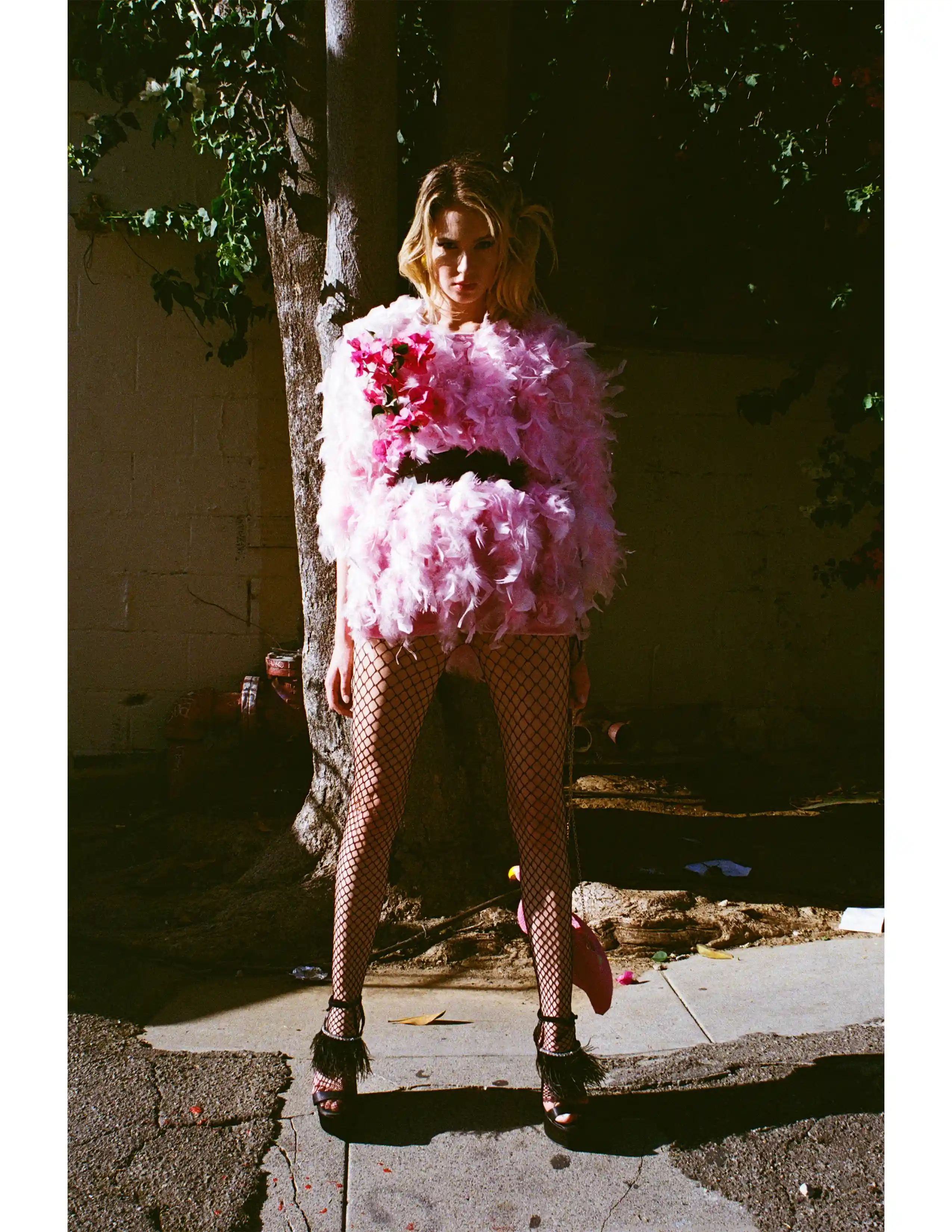
“I want people to remember a feeling, not that I wore beautiful clothes or had the perfect photograph.”
Your career accelerated remarkedly fast, with multiple agency signings across Los Angeles, New York, and Milan within your first year. Looking back, what do you think made you stand out so early in such a competitive industry?
I don’t think I ever walked into a room trying to stand out. If anything, I spent more time trying to blend in. I was coming from a completely different world—I thought I was going to work in medicine—so fashion felt like learning another language I always wanted to do fashion. I became obsessed with watching people. I’d study photographers, stylists, casting directors, even the way other models moved between shots. I also think people could tell I genuinely loved being there. I wasn’t chasing the idea of modeling; I was fascinated by the creative process. Whether it was a small test shoot or a campaign, I treated every opportunity the same. I showed up early, stayed curious, and wanted to make something memorable. Looking back, I don’t think agencies signed me because I had all the answers. I think they saw someone willing to grow.
Was modeling always part of your dream growing up, or did your path into fashion happen
unexpectedly?
Completely unexpectedly. I grew up in Las Vegas and was studying to become a nurse. For a long time I imagined my life in hospitals, not on photo sets. Medicine appealed to me because I wanted to help people, and I loved the discipline behind it. Then modeling appeared almost by accident. At first it felt like I was living two different lives. I’d spend one day thinking about anatomy and pharmacology, and the next I’d be standing in front of a camera trying to tell a story without saying a word. Eventually I realized both worlds had something in common. They both ask you to understand people. Nursing taught me empathy. Modeling taught me observation. Leaving medicine wasn’t easy because it meant letting go of a version of my life I thought was already decided. But sometimes life quietly introduces you to something you’re meant to do long before you’re ready to admit it.
Every successful model experiences defining moments. What was the first project that made you realize your career was truly taking off?
There wasn’t one dramatic moment where everything suddenly changed. It happened slowly. People kept calling back. I’d finish a shoot and think, “Maybe that was just luck.” Then another opportunity would come, and then another. Somewhere along the way I stopped feeling like I was borrowing someone else’s dream and started believing I actually belonged there.
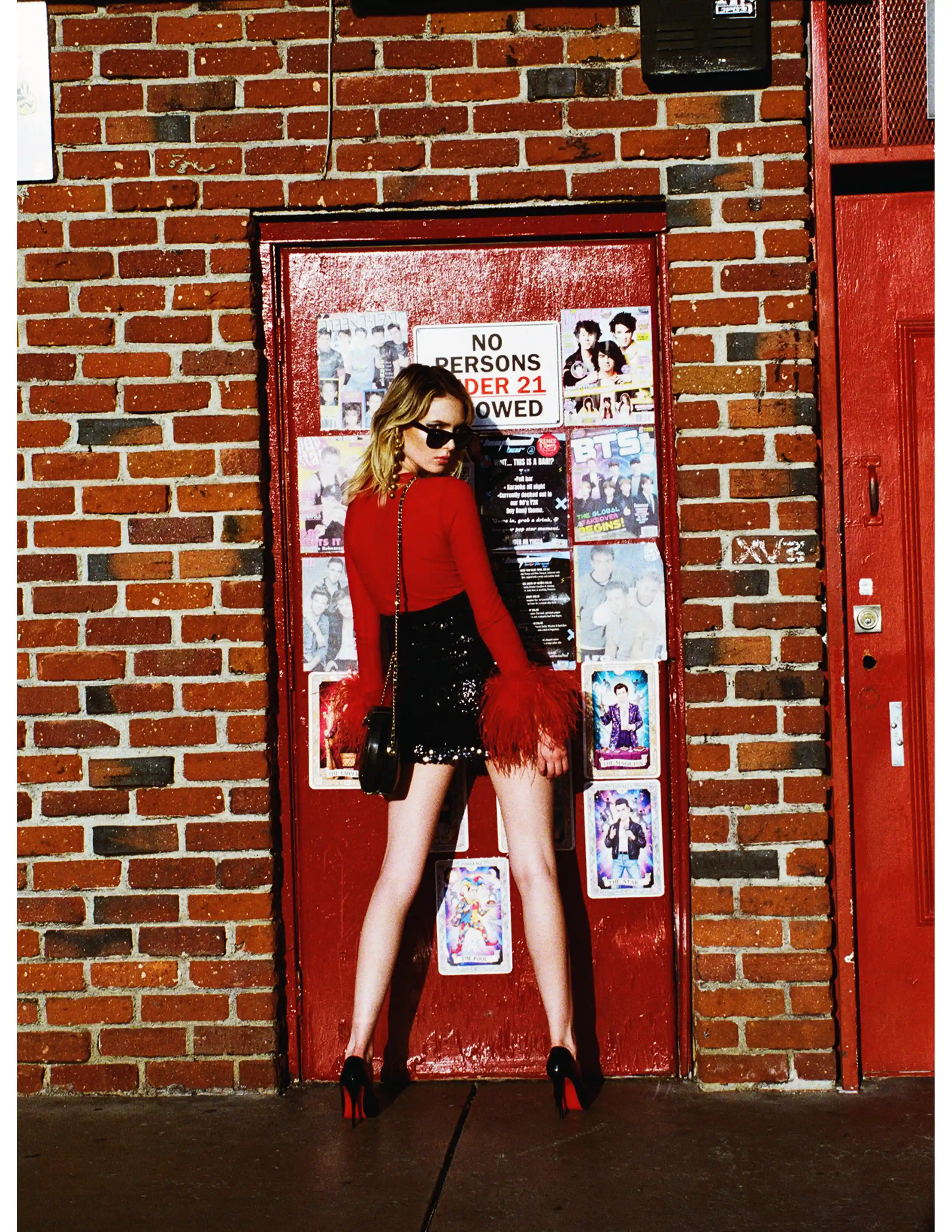
Working in fashion capitals around the world exposes you to different creative cultures. How have Los Angeles, New York, and Milan each influenced you as both a model and an artist?
They’re all completely different personalities. Los Angeles has taught me to dream bigger. New York keeps me on my toes. Milan taught me that confidence doesn’t have to be loud. I think I stole a little from each one of them.
You often describe your work as being rooted in storytelling, transformation, and cinematic imagery rather than simply posing for photographs. When you step onto a set, how do you mentally prepare to become a character?
I give her a story. Is she in love? Is she running away? Has she just missed her train? Once I know that, I stop posing and just react. That’s where the interesting pictures happen.
Many people see fashion photography as beautiful images, but your work often feels like scenes from a film. What inspires your ability to create emotion though a single photograph?
I’ve never been interested in making a picture that’s only beautiful. I want it to feel like someone accidentally paused a film. When I was younger I’d sit with old fashion editorials for hours and imagine what happened before the frame or what happened after it. Those photographs stayed with me because they left room for imagination. Now, whenever I’m shooting, I try to give people that same feeling. If someone looks at an image and starts inventing their own story, then I think we’ve created something much more interesting than a perfect pose.
Is there a particular actress, filmmaker, photographer, or artist whose work has influenced your creative approach?
I don’t think inspiration ever comes from one person. Kate Moss was definitely someone I admired growing up because she made fashion feel effortless. She could wear couture or a simple tank top and somehow it still felt like a story.
How important is collaboration between the photographer, stylist, creative director, and model in creating imagery that truly tells a story?The best shoots feel less like a job and more like a conversation. Everyone brings something different. The photographer sees light differently. The stylist builds the character before anyone says a word. Hair and makeup completely change how you carry yourself. The model brings emotion. When everyone trusts each other, the work becomes much bigger than one person’s idea. I think audiences can feel that, even if they don’t realize why.
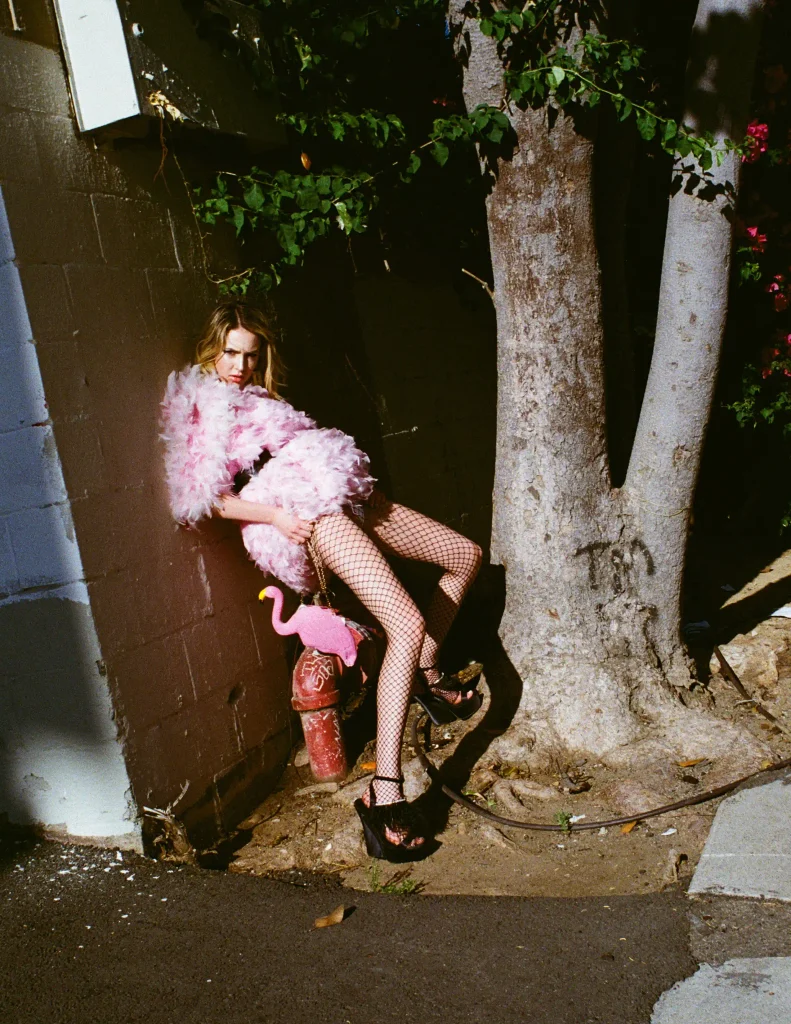
“Little Miss Hollywood” immediately stands out for its cinematic energy, balancing glamour, chaos, vulnerability, and playfulness. What was your first reaction when the concept was presented to you?
The first image that came to mind was that iconic Arthur Elgort photograph of Kate Moss pushing a shopping cart outside Pavilions. It was actually my go-to grocery store when I lived in Los Angeles, so it always felt strangely familiar. I’d saved that photograph years ago because it never felt like fashion to me. It felt like someone had accidentally stumbled across a real moment. When Jazzie described Little Miss Hollywood, I immediately understood what she was chasing. We were talking about old editorials and references, and the second that Kate Moss image came up, everything clicked. I remember thinking, This isn’t crazy at all—it actually makes perfect sense. I loved the idea of couture existing outside liquor stores, beside dumpsters and shopping carts, where glamour feels completely unexpected. Growing up around Las Vegas probably made me appreciate that contrast even more. I’ve always loved places where fantasy and reality exist side by side. Sometimes the places people overlook have the most character. The character never questioned whether she belonged there. She simply did. I think that’s what made her unforgettable.
The shopping cart became such an unexpected visual centerpiece. How did that unconventional element help shape your performance throughout the shoot?
The shopping cart completely changed the way I approached the shoot.
Usually, when you’re modeling, part of your mind is still aware of the photograph—your posture, your hands, the light, the camera. The second I wrapped my hands around that cart, all of that disappeared. I stopped thinking about posing because I finally had something to respond to. Before we started shooting, I made a playlist for the character. Music always helps me disappear into someone else, and suddenly the shopping cart didn’t feel like a prop anymore—it felt like part of her life. Maybe everything she owned was inside it. Maybe she’d just walked away from someone. Maybe she had absolutely nowhere to be except exactly where she was. It reminded me of that Arthur Elgort photograph that first inspired me. I love that image because it proves glamour doesn’t need a perfect backdrop. Sometimes the most unforgettable fashion photographs happen in the most ordinary places. Once I believed her story, I forgot about the camera. I wasn’t performing anymore. I was simply living inside her world.
The editorial feels almost like a movie frozen in time. What emotions were you hoping viewers would experience when looking at the images?
More than anything, curiosity. I never want someone to look at a photograph for two seconds and move on. I want them to pause and wonder who she is. Is she celebrating? Is she heartbroken? Did she just make the best decision of her life, or the worst? The photographs I love most never answer those questions. They leave space for your imagination. If someone creates their own story while looking at these images, then we’ve done something much more interesting than simply making beautiful fashion photographs.
Were there any memorable behind-the-scenes moments that perfectly captured the spirit of the production?
One of my favorite memories actually happened before we even started shooting. We found this beautiful vintage Nadine Mabel beaded skirt sitting on the street in pristine condition on Hollywood Boulevard. It felt completely surreal, like the universe had left it there waiting for us. Jazzie had handmade this incredible bustier, and I remember her pairing it with the skirt because together they felt like they belonged to the same woman. It was one of those moments you could never plan. Later we found out the skirt retailed for hundreds of dollars, which made the whole story even funnier. That day reminded me that some of the best creative moments happen when you’re willing to follow instinct instead of a plan. We weren’t chasing perfection—we were responding to whatever the day gave us. I think that’s why those photographs feel alive. Fashion can sometimes become so polished that it loses its humanity. My favorite editorials always leave room for accidents, imperfections, and little moments of magic. Those are usually the images people remember.
Creative director and fashion stylist Jazzie Bella conceived the entire concept and creative direction for this editorial. What impressed you most about her vision from the moment she shared the idea?
What impressed me most was that Jazzie wasn’t just styling clothes—she already knew who this woman was. Every reference had a reason. Every location had a story. Nothing felt random. That gave me a lot of freedom because I wasn’t trying to invent the character from scratch. I could simply step into a world that already existed and react honestly inside it.
Jazzie Bella has earned international recognition, with features across major fashion publications from Vogue Italia to Vogue Japan- and being named a “style master” by Elle Japan magazine for an extraordinary thirteen consecutive years. What makes collaborating with someone of her creative caliber such a unique experience?
Working with someone who’s been doing this for so long reminds you that great fashion isn’t really about trends. It’s about having a point of view. She isn’t interested in making something that looks like everyone else’s work. That confidence encourages everyone around her to take creative risks too. As a model, that’s exciting because you’re trusted to contribute something personal instead of simply recreating what’s already been done.
How much creative freedom were you given to contribute your own interpretation of the character while staying true to Jazzie’s original vision?
More than people probably realize. Once we understood who she was, there wasn’t a long list of poses to recreate. I could respond instinctively. Sometimes we’d change direction because something unexpected happened, and often those became my favorite photographs. I’ve learned the strongest editorials usually come from leaving a little room for surprise.
Do you think the strongest editorials happen when everyone involved shares a common narrative rather than simply focusing on fashion?
Absolutely. Beautiful clothes can catch your attention, but a story is what makes you remember an image years later. When everyone is chasing the same feeling instead of the same pose, something shifts. Fashion becomes emotional. That’s what I’ve always been drawn to. I don’t really think about selling clothes when I’m shooting. I think about creating a person that feels believable enough for someone to care about her.
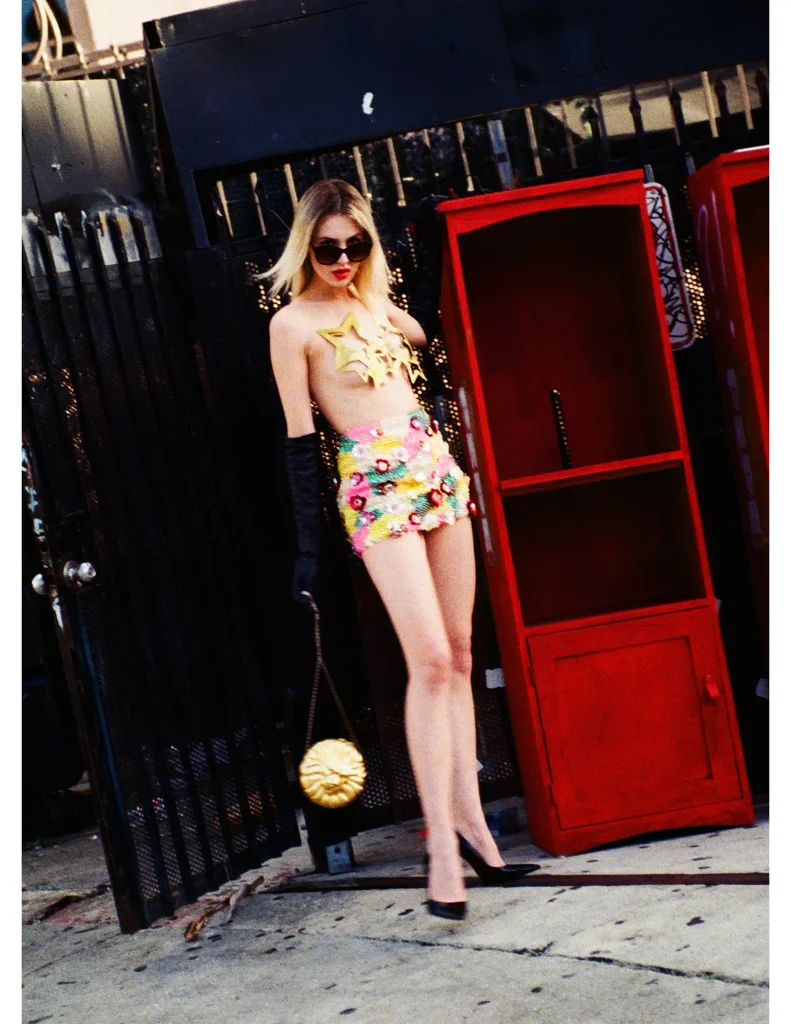
Fashion constantly evolves. How do you balance following trends while maintaining your own artistic identity?
I’ve realized trends move much faster than identity. Growing up, I admired women like Kate Moss because she never looked like she was trying to become someone else. There was always an ease about her. That’s what I try to remember. I pay attention to fashion because it’s constantly evolving, but I never want trends to become louder than my own instincts. I’d rather create one timeless image than ten fashionable ones that people forget six months later.
What kind of editorials excite you the most- high fashion, conceptual art, vintage glamour, cinematic storytelling, or something entirely different?
Cinematic storytelling, every time. I love photographs that feel like stills from a film you’ve never seen. Those are the shoots where I lose track of time because I’m not thinking about modeling anymore. I’m thinking about the character. That’s probably why acting feels like such a natural next step for me. Both worlds ask the same question: “Who is this person?” Once I know the answer, everything else follows naturally.
Outside of modeling, what inspires you creatively? Are there films, books, music, or experiences that continually shape your imagination?
Travel has probably influenced me more than anything. Every city teaches me something different. Growing up in Las Vegas, I was surrounded by fantasy. Everything felt larger than life. Then I moved to New York, where people don’t really care who you are—they care what you bring. That taught me resilience. I also spend a lot of time people watching. I love imagining who someone is just from the way they order coffee or walk across a street. Those tiny observations usually become the characters I bring onto set.
What have been the biggest personal lessons you’ve learned since entering the fashion industry?
That confidence isn’t something you’re born with. People often assume models wake up believing they’re beautiful or fearless, but that hasn’t been my experience at all. Moving from Las Vegas to New York taught me that confidence is really just continuing to show up after hearing “no.” I’ve been rejected far more than I’ve been hired. I’ve questioned myself. I’ve compared myself. I’ve wondered if I belonged. Eventually I realized everyone does. The difference is that some people stop, and some people keep going anyway. That changed everything for me.
As your international career continues to grow, what kind of creative projects are still on your bucket list?
I would love to shoot campaigns that feel more like short films than advertisements.
Is acting something you would like to pursue, considering how naturally tour editorials lean towards cinematic storytelling?
Definitely. When I first started modeling, I thought success meant learning the perfect pose. Now I think it’s almost the opposite. The best photographs happen when you stop thinking about yourself completely. That’s exactly what acting asks of you. I love becoming someone else for a few hours. Understanding how they think. How they move. What they’re afraid of. Modeling introduced me to storytelling without words. Acting feels like continuing that conversation.
Are there any photographers, designers, or creative directors you hope to collaborate with in the future? Or work with again?
More than chasing specific names, I hope I continue finding people who care about creating something lasting. Some of my favorite experiences haven’t happened because someone was famous. They happened because everyone believed in the same story. Of course there are photographers and designers I’ve admired for years, but I think the work is always strongest when you’re chosen because someone genuinely sees you—not because you’re trying to fit into someone else’s idea of beauty.
Those relationships are the ones that last.
Looking five years ahead, how would you like people to describe Bella Monroe- not only as a model, but as an artist?
I hope they say I made them feel something. Not that I wore beautiful clothes. Not that I had the perfect photograph. I hope they remember a feeling. I’d love people to look at my work years from now and still wonder who that woman was or what she was thinking. If an image stays with someone long after they’ve closed the magazine, then I think it has done its job.
If “Little Miss Hollywood” were the opening scene of a feature film about your life, what would the title of the movie be- and how would you hope the story ends?
I’d probably call it Still Becoming. I’ve realized that every time I think I’ve arrived somewhere, life quietly asks me to begin again. Leaving medicine. Walking into castings where nobody knew my name, each chapter has asked me to become a different version of myself. I hope the ending never really feels like an ending. I hope I’m still curious. Still taking risks. Still choosing projects that scare me a little. I think that’s where growth lives.
Finally, what message would you like to share with aspiring models and young creatives who dream of building a career through authenticity, imagination, and fearless storytelling?
Don’t build your life around becoming someone else’s version of success. The fashion industry will always have opinions about who you should be. Listen to people who help you grow, but don’t lose yourself trying to make everyone happy. The things that make you different are usually the things people remember. For a long time I thought I had to become more confident before I deserved opportunities. Now I know confidence comes afterward. It comes from showing up. From taking the train to castings that lead nowhere. From hearing “no” and returning the next morning anyway. From believing in yourself before anyone else has a reason to. That’s something no agency, campaign, or magazine can ever give you. You have to build it yourself.